Free Fire Max Panel Headshot settings remain one of the most searched topics among players who want better accuracy and faster eliminations during intense battles. Many gamers use customized sensitivity, HUD layouts, and panel configurations to improve headshot percentage and overall gameplay performance. Understanding the right setup can help players react quickly, control recoil efficiently, and achieve consistent results in ranked and classic matches. This guide covers important settings, adjustments, and optimization methods for a smoother Free Fire Max gaming experience in 2026.
Understanding Panel Configuration
Importance of Headshot Accuracy
Headshot accuracy plays a major role in winning fights because it allows players to eliminate enemies quickly with fewer bullets. A properly adjusted Free Fire Max Panel Headshot setup helps improve aiming consistency, reaction speed, and weapon control, making engagements more effective during competitive and ranked matches regularly.
Role of Auto Aim Settings
Auto aim settings assist players by improving target tracking and helping crosshairs stay closer to opponents during movement. When combined with suitable sensitivity values, these settings can support smoother aiming transitions, reduce missed shots, and increase the likelihood of landing accurate headshots consistently during battles.
Impact on Competitive Matches
Competitive matches demand precise aiming and fast decision-making under pressure. An optimized panel configuration helps players maintain control during intense situations, improves shooting confidence, and supports consistent performance. Proper adjustments can provide advantages when facing skilled opponents across different maps and challenging combat scenarios.
Common Mistakes to Avoid
Many players use extreme sensitivity values or copy settings without testing them properly. This often results in unstable aim and inconsistent performance. Avoid changing multiple settings simultaneously. Instead, make gradual adjustments, evaluate results carefully, and focus on building muscle memory through continuous gameplay practice sessions.
Benefits of Custom Adjustments
Custom adjustments allow players to create a setup that matches their personal playstyle and device performance. Tailored configurations can improve comfort, responsiveness, and aiming precision. By optimizing settings according to individual preferences, players often experience better control and enhanced overall effectiveness during combat situations.
Sensitivity Optimization
General Sensitivity Settings
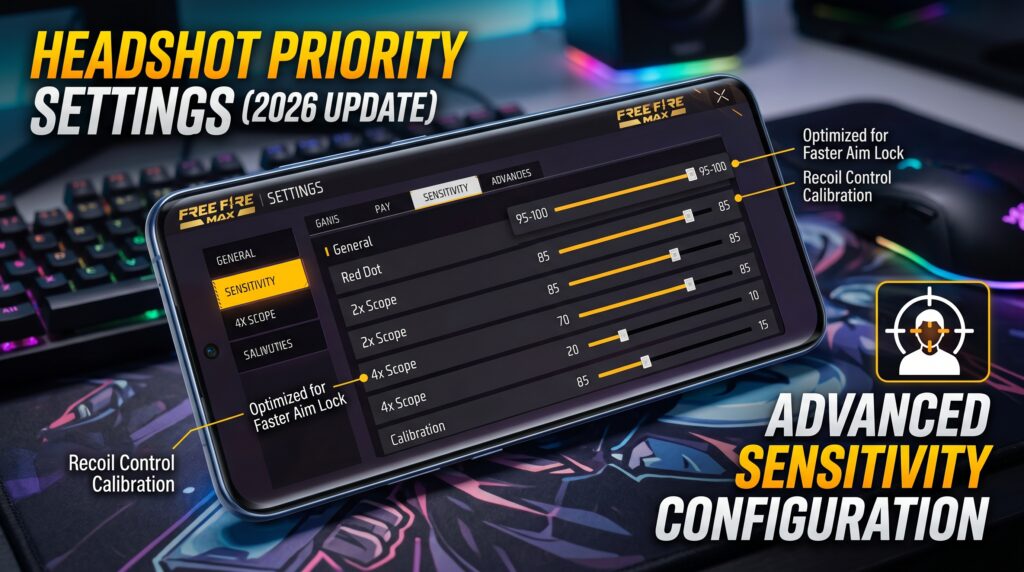
General sensitivity affects overall camera movement and aiming responsiveness. Finding a balanced value is essential because excessively high settings may reduce control while low settings can slow reactions. Proper calibration helps players track enemies smoothly and perform quick adjustments when engaging targets during active encounters.
Red Dot Sensitivity Setup
Red Dot sensitivity influences aiming precision with one of the most commonly used scopes in Free Fire Max. A well-balanced setting allows accurate tracking and quick headshot adjustments. Players should test various values to find a comfortable range that supports reliable performance across multiple combat situations.
2x Scope Configuration
The 2x scope requires a sensitivity level that balances speed and precision. Higher values may help with faster movements, while moderate settings improve stability. Proper configuration enables players to maintain better crosshair placement, react efficiently to enemy movement, and secure more accurate shots consistently.
4x Scope Adjustment
The 4x scope is useful for medium and long-range engagements where precision becomes increasingly important. Sensitivity should remain stable enough for controlled aiming without sacrificing responsiveness. Careful adjustments help players maintain accuracy, reduce overcorrection, and improve target tracking during distant firefights across various maps.
Free Look Sensitivity
Free Look sensitivity determines how quickly players can observe surroundings without changing movement direction. Appropriate settings improve awareness, help identify threats faster, and support better strategic positioning. Maintaining balanced values allows smooth camera movement while preserving control during exploration, looting, and combat preparation phases.
HUD Layout Customization
Fire Button Placement
Fire button placement significantly impacts reaction time and aiming comfort. Positioning the button where it feels natural allows faster shooting responses and easier drag headshot techniques. Players should adjust size and location according to hand movement patterns for better consistency during intense engagements and battles.
Crosshair Alignment Strategy
Crosshair alignment helps maintain readiness before encountering opponents. Keeping the crosshair positioned near likely enemy locations reduces adjustment time and increases headshot opportunities. Consistent alignment habits contribute to improved accuracy, quicker reactions, and better overall combat effectiveness across different gameplay situations and maps.
Button Size Management
Button size affects both visibility and control. Oversized buttons may obstruct vision, while smaller buttons can become difficult to press accurately. Finding the right balance improves responsiveness and comfort. Proper sizing supports smoother gameplay and helps maintain consistent performance during fast-paced combat encounters and engagements.
Movement Control Optimization
Movement controls should support quick directional changes without affecting aiming precision. A comfortable layout allows seamless transitions between running, jumping, crouching, and shooting. Optimized controls enhance mobility, reduce input errors, and provide better flexibility when responding to opponents during dynamic combat scenarios and challenges.
Custom HUD Testing
Testing custom HUD layouts is essential before adopting them permanently. Spend time in training modes and casual matches to evaluate comfort and effectiveness. Regular testing helps identify weaknesses, refine button placement, and ensure the layout supports consistent performance during competitive gameplay environments and situations.
Device Performance Settings
Graphics Quality Balance
Balancing graphics quality ensures smooth gameplay while maintaining visual clarity. Extremely high settings may reduce performance on some devices, leading to lag and frame drops. Selecting appropriate graphics options helps create a stable environment where aiming and movement remain responsive throughout matches and engagements.
Frame Rate Optimization
Higher frame rates contribute to smoother animations and improved responsiveness during gameplay. Consistent performance allows players to track enemies more accurately and react faster. Adjusting settings to maintain stable frame rates can significantly enhance aiming precision and overall effectiveness during competitive Free Fire Max matches.
Reducing Input Delay
Input delay can negatively affect aiming accuracy and reaction speed. Closing background applications, maintaining sufficient storage space, and optimizing device settings help minimize delays. Reduced latency creates a more responsive gaming experience, allowing players to execute movements and shots with greater precision and confidence.
Storage Management Tips
Proper storage management helps maintain device performance by preventing slowdowns and unnecessary lag. Removing unused applications, clearing temporary files, and keeping adequate free space can improve system efficiency. A well-maintained device supports smoother gameplay and more reliable performance during extended gaming sessions regularly.
Battery Performance Considerations
Battery performance can influence gaming stability, especially during long sessions. Low battery levels may trigger power-saving features that reduce performance. Keeping devices adequately charged and monitoring battery health helps maintain consistent responsiveness, ensuring a smoother experience while aiming, moving, and engaging opponents effectively.
Weapon-Specific Adjustments
Assault Rifle Settings
Assault rifles require balanced sensitivity and recoil control for effective headshot accuracy. Proper adjustments allow players to maintain precision during continuous firing. Optimized settings improve stability, support accurate tracking, and enhance overall performance when engaging enemies at various distances throughout different match situations consistently.
SMG Control Techniques
Submachine guns excel in close-range combat where speed and responsiveness are essential. Sensitivity settings should support rapid target acquisition while maintaining control. Proper optimization helps players track moving opponents efficiently, perform quick headshot adjustments, and maximize effectiveness during aggressive engagements and fast-paced encounters regularly.
Sniper Precision Setup
Sniper rifles demand exceptional accuracy and careful sensitivity adjustments. Stable settings help maintain control during long-range aiming and reduce unnecessary movement. Consistent practice combined with optimized configurations allows players to improve precision, secure accurate headshots, and perform effectively in strategic combat situations consistently.
Shotgun Headshot Support
Shotguns rely heavily on close-range positioning and quick reactions. Appropriate sensitivity settings support rapid crosshair movement and efficient drag techniques. Proper optimization improves aiming confidence, increases headshot opportunities, and helps players capitalize on high-damage potential during intense close-quarters engagements and challenging combat encounters.
Versatile Weapon Profiles
Different weapons require unique handling characteristics. Creating versatile profiles allows players to adapt sensitivity and control preferences according to weapon selection. This flexibility improves comfort, enhances aiming consistency, and supports better overall performance across varied combat scenarios encountered throughout Free Fire Max gameplay sessions.
Training and Practice Methods
Training Ground Exercises
Training grounds provide a controlled environment for testing settings and refining aiming skills. Regular practice sessions help players understand sensitivity behavior, improve muscle memory, and evaluate performance adjustments. Consistent exercises contribute to better accuracy and increased confidence when transitioning into competitive matches and gameplay situations.
Drag Headshot Practice
Drag headshot practice focuses on moving the crosshair upward quickly to target enemy heads. Repeated training improves timing, coordination, and consistency. Developing this technique through structured practice sessions helps players increase headshot rates and perform more effectively during real combat encounters and engagements.
Reaction Time Improvement
Reaction time plays a critical role in winning firefights and securing eliminations. Regular drills that emphasize quick target recognition and fast responses help sharpen reflexes. Improved reaction speed allows players to engage opponents efficiently and capitalize on opportunities before enemies gain an advantage during combat.
Match Review Techniques
Reviewing gameplay recordings helps identify strengths, weaknesses, and recurring mistakes. Analyzing positioning, aiming decisions, and combat outcomes provides valuable insights for improvement. Consistent review sessions support better decision-making, encourage strategic adjustments, and contribute to long-term growth as a Free Fire Max player.
Consistency Building Habits
Consistency develops through routine practice and disciplined gameplay habits. Using the same settings regularly helps strengthen muscle memory and improve overall control. Maintaining structured training schedules encourages steady progress, enhances aiming reliability, and supports sustained performance improvements across different gameplay environments and scenarios.
Advanced Gameplay Enhancements
Positioning for Headshots
Effective positioning increases visibility and reduces exposure to enemy attacks. Choosing advantageous locations allows players to maintain better crosshair placement and create more headshot opportunities. Strong positioning habits improve survivability, support strategic engagements, and contribute to greater success during competitive matches and encounters.
Movement and Aim Coordination
Coordinating movement with aiming helps maintain accuracy while avoiding enemy fire. Smooth transitions between strafing, jumping, and shooting improve combat effectiveness. Developing synchronization between movement and crosshair control enables players to react efficiently and perform consistently during dynamic and unpredictable battle situations regularly.
Recoil Control Techniques
Recoil control is essential for maintaining accuracy during sustained firing. Understanding weapon behavior and adjusting aim accordingly helps keep shots on target. Consistent practice with recoil management techniques improves stability, increases headshot potential, and enhances overall shooting performance across different combat scenarios and situations.
Adapting to Different Maps
Each map presents unique challenges, engagement ranges, and tactical opportunities. Adapting settings and strategies according to map characteristics helps maximize effectiveness. Understanding terrain, common enemy positions, and movement patterns allows players to make informed decisions and maintain strong performance throughout various match environments.
Long-Term Improvement Strategy
Long-term improvement requires patience, consistency, and regular evaluation of performance. Setting achievable goals, practicing deliberately, and refining techniques gradually produce meaningful progress. Players who focus on continuous development often achieve stronger accuracy, better decision-making, and improved results in Free Fire Max competitive gameplay.
Conclusion
Free Fire Max Panel Headshot settings can significantly improve aiming performance when combined with proper sensitivity adjustments, optimized HUD layouts, and consistent practice. Players should focus on gradual improvements rather than copying random configurations. By testing settings carefully and developing strong gameplay habits, achieving better accuracy and more reliable headshots becomes much easier in 2026.
FAQs (Frequently Asked Questions)
Best Headshot Setting?
The best setting depends on your device and playing style.
Auto Aim for Headshots?
Auto aim helps targeting, but practice is still necessary.
Change Sensitivity Often?
No, avoid frequent changes to maintain consistency.
Good for Low-End Devices?
Yes, optimized settings can improve performance and accuracy.
Is HUD Important?
Yes, a proper HUD helps with faster aiming and better control.